
Want Better Neighbors?: Go North
/By Don Varyu
Jan 2026

bout a quarter of all Americans say they don’t really like the neighborhood where they live. Which is sad. The reasons range from crime to housing costs to the quality of local schools. However, what is not normally measured is the quality of their neighbors.
Of course, this conclusion is subjective, and typically applies to the people living in close proximity to you—next door, or folks you often run into riding down the elevator. But there is another metric to consider: how “helpful” those neighbors might be; not in the sense of how “friendly”, but what they might actually do for everyone. And here, there’s considerable variance in the results.
Most people say they’d like to like in a neighborhood where people are more helpful. But how could you do that? Maybe surprisingly, the data say the best solution is pretty simple—just move North. (And no, I’m not talking about Canada.)
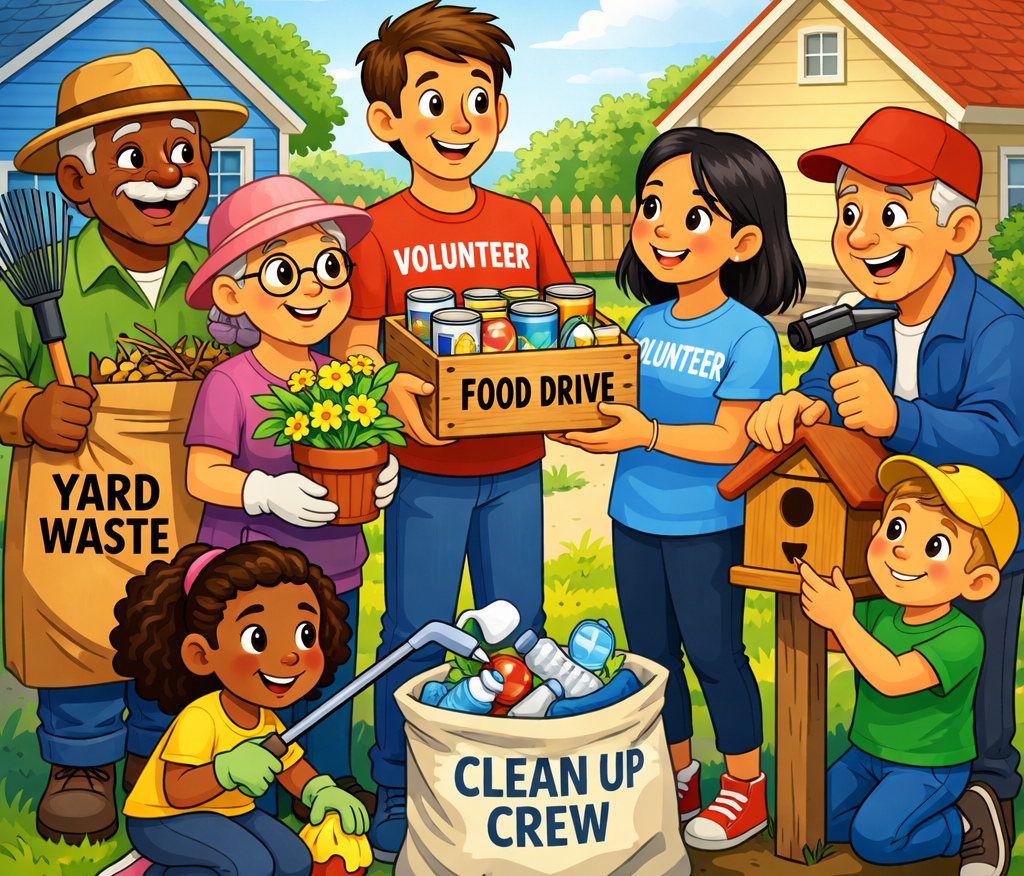
According to a survey reported by USA Facts, you are much more likely to find helpful people in northern states. And this applies in two different definitions: in a “formal” sense ( for example, membership in an organization, like working for a foodbank, Habitat for Humanity, etc.); or “informal” (think of a neighbor willing to run errands, shovel snow in common areas, or babysit for someone else).
In total, there are seventeen states where more than a third of respondents reported volunteering with a formal organization. Utah was first (47%). There states are predominantly in the north. Conversely, nearly every state registering fewer than 30% of residents volunteering was in the south—below the old Mason-Dixon line.
As far as informally helping neighbors (i.e., the“out of the goodness of their hearts” folks), there are 16 states where more than 60% perform these good deeds. And all 16 span the middle and far northern bands of the country…ranging all the way from the Pacific Northwest to Maine. Those states which fail to exceed even 51% lay solidly in the south.*
A few other interesting distinctions:
You can’t just infer political bias here. Among the more “helping” states are Montana, Idaho, Wyoming, Nebraska, both Dakotas, and Iowa—those are “Trump states.”
Similarly, politically polarized big states--California, Texas, Florida, and New York—all rank below national averages in “neighborliness.”
Women are just a little more likely to formally volunteer than men…but the genders are essentially equal in terms of informal help.
Military vetans were more likely to volunteer than non-veterans.
Generationally speaking, who’s most likely to help by joining organizations? Gen X’ers. And the most likely to informally help out? Boomers. Millennials are markedly ahead of Gen Z’ers on both counts (perhaps a reflection of both age and both disposable time and income).
Maybe least surprisingly, on a national basis, rates of neighborliness across the board are up since the end of Covid, particularly on the formal volunteering level. Maybe this is a recognition that, under current circumstances, people are more aware that more of their neighbors need help; struggle seems more apparent.
___
*These findings seem certain to offend some people, especially those living in the south. Two clarifications:
First, the data are collected by the U.S. government, as it does the census. Results here are gathered through direct interviews, surveys and coordination with organizations. They are also subject to comnprehensive review.
Second, to repeat, an essential distinction is inherent here. “Neighborliness” is separate from “friendly”; i.e., the difference between those taking action versus those who will smile and kindly say hello.
