
Are You a Socialist?
/By Don Varyu
July, 2026
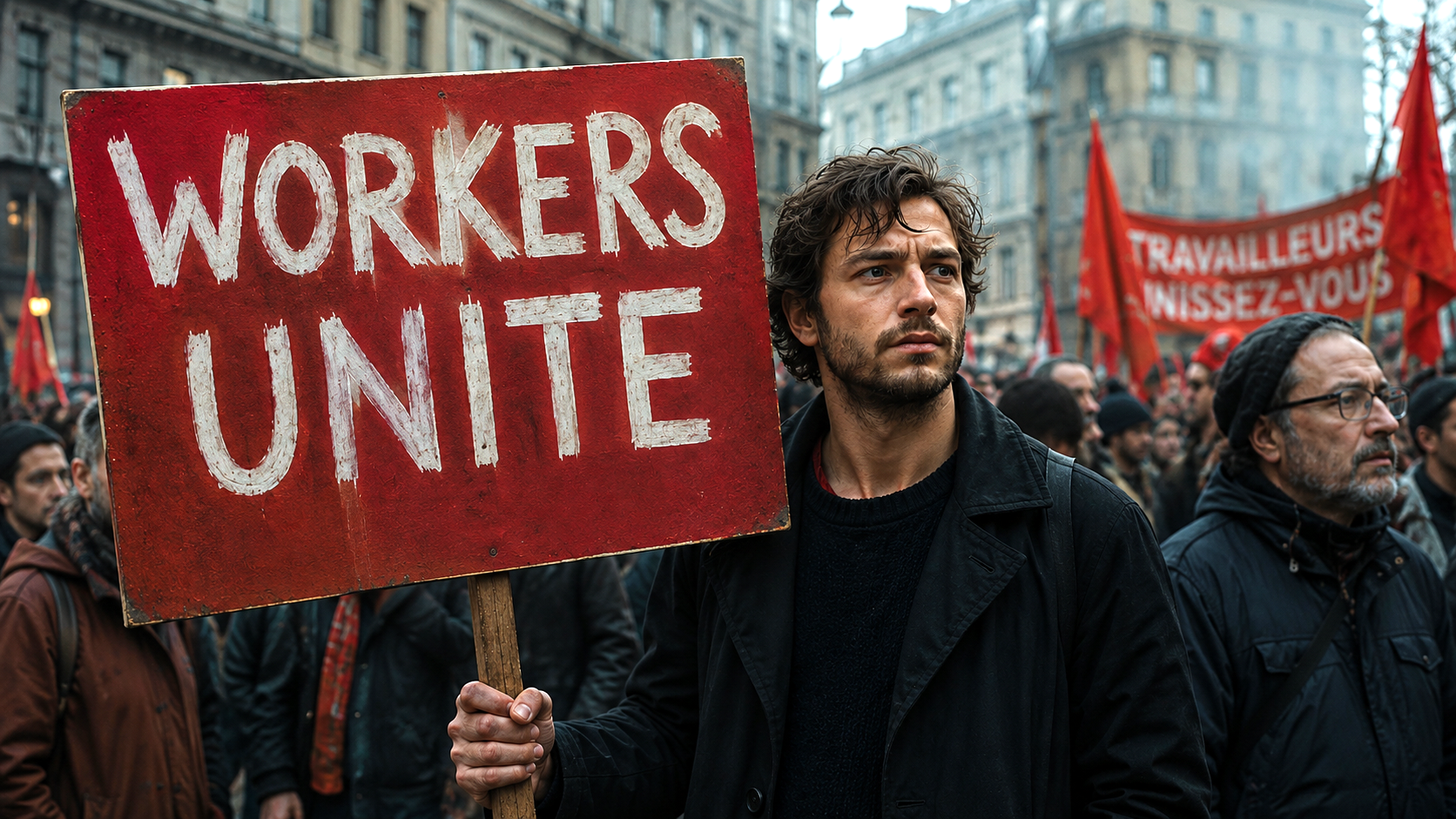

re you a socialist? Well, not long ago, almost everybody would answer the same way: “Of course not! I’m an American!” Which, regardless of your politics, is a wrong answer. Because “American” is a nationality, and socialism is an economic system. Apples and oranges. The “enemy” of socialism is capitalism--and as we’ll see, for many people, that’s the whole problem.
However, before moving on, two quick stipulations:
If pressed, almost everyone would admit to being at least a little bit socialist. I haven’t heard anyone calling for scrapping the federally owned and operated U.S. military in favor of 50 separate state militias. Likewise, few people driving on I-90 across the country would be pleased to discover that South Dakota refused to build its section, reducing traffic to two lanes. Anyway, you get the point.
Secondly, defining “socialism” is maddening--there are too many “flavors.” Core beliefs may be similar between them, but there are often conflicts. For example, a Democratic Socialist is different from a Socialist Democrat. Then, among key questions are these: should capitalism and the financial markets be abolished, with “the people” owning and operating everything? Or should private ownership work alongside socialism? In either case, should such decisions be made by elections…or revolution? It’s a quagmire.
Thus, for our purposes, I’ll just focus on “Democratic Socialists,” since they are now readily recognizable. This group includes Bernie Sanders, AOC, Mayor Zohran Mamdani of New York, the new (regrettable) mayor of Seattle, Katie Wilson. Plus hundreds of Congressional, state and city elected officials.
Which begs the question: how did so many of these offbeats ever win elections?
s with many things, the New York Times provides answers. Along with Siena research, the paper conducted a comprehensive survey of 1,500 Democrats in late May. To emphasize—this is NOT a look at ALL voters—just those most likely to vote for Democratic candidates moving forward. And to simplify, I’ll combine responses of those who listed themselves as either “strongly” or “somewhat” in favor or against a policy or issue.
There is a clear bottom line here. “Younger” Democrats (ages 18-45) may be closely aligned with their older Democratic counterparts on many issues…but significantly break with them on several pivotal arguments.
This reflects their belief that they are blocked by a system that denies them even a chance to realize “the American dream.” And their bitterness expands to include traditional Democratic party policies, fundraising, campaigning, and messaging.
If you doubt the existence and importance of this chasm, consider this: in 2024, 10% of self-described Democrats over the age of 45 did NOT vote.
But for Democrats under 45, 31% DID NOT VOTE! Effectively, one out of every three available younger Dems didn’t bother filling out a ballot. So, do the math…
Kamala Harris lost by two million votes nationally.
Some 15 million young Democrats just stayed home.
Forget the post-election slicing and dicing by race, gender, education, income, age or geography. Disaffected young Democrats gave Donald Trump his second term--by doing nothing. You could say, “well then, they just got what they deserved.”
But the rest of us got it, too.
To me, this seems like something worth addressing.

he official pie-in-the-sky agenda of the Democratic Socialists of America (DSA) contains goals that are often worthy…but frequently downright impossible. (Could we realistically retrofit every building in America for energy efficiency?) And one winner of a Congressional primary election has previously called for the elimination of all prisons. Seems a wee bit rash, no?
No matter. As Democrats look forward, there are two vital areas where the New York Times survey shows policy needs to be hammered—repeatedly. This will show those younger voters that they’re being heard.

ere are the numbers supporting emphasis on those two issues. (Unless otherwise noted, these survey results are for just Democratic voters aged 45 and younger):
ECONOMY
91%: the current economic system in American is unfair
95%: angry over cost of living
When asked how the current political/economic system should be altered, they responded as follows:
0%: make no changes
12%: minor changes
61%: major changes
28%: “tear it down and start over” (here, compared to just 10% for voters 65+)
55%: hold a favorable view of socialism, compared to just 18% unfavorable
(Note: Total Democratic voters also hold a favorable view, but by a smaller margin: 49% favorable to socialism, 22% unfavorable)
Loud complaints about the lack of affordable housing and affordable health care compound the despair and distrust in our current economic system.
ISRAEL
Where do your sympathies lie in the Israeli-Palestinian conflict?
7%: Israel
71%: Palestine
(Note: 45+ Dems favor Palestine, 44% to 27%)
82%: oppose any more military aid to Israel
92%: disapprove of Israel’s overall conduct in relation to Palestine
The left-wing commentariat will assure you that Joe Biden’s biggest sin was waiting so long to withdraw from the race. But something even more determinant may have been at work: his decision to hug Bibi Netanyahu on the tarmac on arrival in Washington. Then Kamala compounded the problem by saying she agreed with all of Biden’s positions. The outrage actually exploded far beyond “a few college protests.” Millions decided Trump—AND the Democrats—were not for them.
he responses on these two issues are so straightforward that they scream off the page. You could feed all this NYT survey data into AI and it could compose a winning campaign message in about 30 seconds. It remains to be seen if Democratic party think tanks can successfully incorporate this into their messaging. The early returns are not encouraging. The Democrats’ “big tent” may not be big enough.

one of this is to discount the fact that “socialism” as a concept is repellant to tens of millions of voters. To me, the reason boils down to semantics.
Donald Trump is the main culprit. He deftly equates—in one sentence—socialism and communism and fascism and terrorism. He wants you to believe that these are all the same thing. How could anyone be for terrorism?
But Democrats also hold a big part of the blame when they blithely wear the badges of “left” and “far left”…without explaining what that means. These words evoke two distinctly different images:
To many, the definition that immediately comes to mind is economic. Which is where (at least in the mind of the DSA) primary emphasis should be placed. And I agree.
However, partially due to the malevolent efforts of the GOP, “far left” is all about “woke” and identity politics. They warn the “far left” are the people who supposedly force transgender surgery on their own children. The gag meter hits eleven. But the strategy is proven.
So, this comes down to a battle of the “isms.” Unquestionably, many groups of people face unfair discrimination. It’s wrong, and it’s also spiritually un-American. But leading with racism, sexism, antisemitism and the like is self-defeating. First, all this is is, at heart, exclusionary. And second, Trumpism will always turn this into a winner for the right. By now, we know the right plays by its own rules. And cheating is a powerful tool to win elections.
Thus, the focus must raise up the “other” “ism”—"class-ism.” The commandeering of the country by the billionaires, the tech titans and the mega-corporations is the evil that most consumes younger voters—even many who consider themselves Republicans. Keep drilling on this relentlessly. Present specifics, even if there may not be immediate chances for change. At least show these people that they’re being heard.

ome 2,500 years ago, the Chinese military strategist Sun Tzu wrote these words in his book, The Art of War:
“…the skilled commander chooses the terrain, timing, and conditions that favor his strengths and expose the enemy's weaknesses.”
This is the time for Democrats. The enemy’s weaknesses are laid bare. Class warfare is the terrain on which we should choose to wage the battle.
Right now, the DSA and the mainline Democrats are pointing at each other and shouting, ‘they’re the bad guys—we can’t live with them!”
But the fact is, they can’t live without each other. They win together…or they lose alone.
